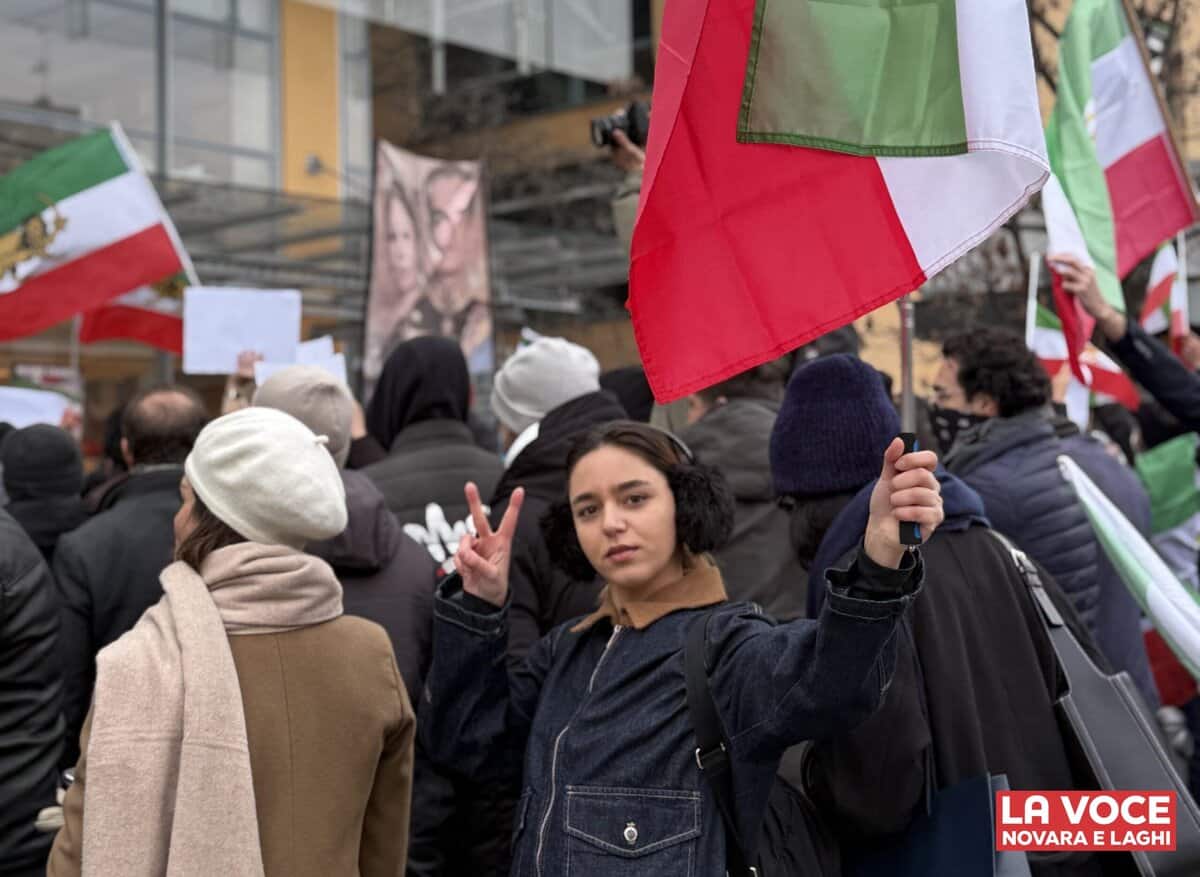
«Da tre giorni il regime ha staccato la spina. Niente internet, niente telefoni. Non so se i miei genitori stanno bene, se sono al sicuro. Il silenzio è l’arma con cui stanno cercando di nascondere il massacro». Gli occhi di Tiyam Ghazal Rahimi sono lucidi ma fermi. Venticinque anni, determinata, una laurea magistrale appena conseguita a Novara, Tiyam è una dei circa 130 studenti iraniani che vivono nella nostra città.
La incontriamo in una data non casuale: oggi è il compleanno di Ahmadreza Djalali, il ricercatore detenuto in Iran dal 2016 e condannato a morte, che proprio all’Upo è stato visiting professor. Un filo rosso di dolore e speranza lega la storia del professore a quella di Ghazal e dei tanti giovani che hanno scelto Novara per costruire il proprio futuro.
Ghazal vive a Novara da tre anni. È arrivata per studiare Biotecnologie Mediche Farmaceutiche. «Ho scelto l’Università del Piemonte Orientale perché, dalle mie ricerche, risultava essere una delle migliori istituzioni del Nord Italia in questo campo specifico, un vero punto di riferimento scientifico» spiega la giovane. «In Iran non abbiamo laboratori adeguati, la ricerca è soffocata. Qui il governo e l’università ci hanno aiutato molto con le strutture, ma il permesso di soggiorno è complicato: servono tempi lunghi, non possiamo tornare a casa facilmente. E ora, casa sembra più lontana che mai».
La situazione nel suo Paese è precipitata dopo l’appello alla mobilitazione del gennaio scorso. «Il regime ha oscurato tutto. Internet era l’unico ponte col mondo. Ora arrivano solo video tramite Starlink, ma bisogna stare attenti: molti sono fabbricati dal regime stesso per diffondere il panico e spegnere il fuoco della rivoluzione. Mostrano violenze costruite ad arte, mentre quelle reali, le esecuzioni sommarie e gli arresti negli ospedali, avvengono nel buio».
«Non è una protesta, è una rivoluzione» Ghazal ci tiene a smontare la narrazione che spesso arriva in Occidente. «Molti media parlavano di proteste per il velo o per il carovita. L’inflazione è terribile, il dollaro è passato da 33.000 a 140.000 toman in tre anni, la gente ha fame. Ma non è questo il punto. Questa è una rivoluzione totale. Non vogliamo riforme, vogliamo la fine della Repubblica Islamica». La studentessa descrive un popolo unito: «Non ci sono solo le donne o gli studenti. Ci sono i mercanti, i lavoratori, le classi agiate e quelle povere. In molti invocano il ritorno del Principe ereditario Reza Pahlavi. Dopo 40 anni di corruzione, uccisioni e furti in nome della religione, la gente vuole riprendersi la propria identità».
«Vivo in Italia da tre anni e mi sorprende che molti pensino all’Iran come a un paese arabo arretrato» continua Ghazal. «Noi siamo persiani, abbiamo una cultura millenaria, moderna. Teheran, prima della repressione, era piena di caffè, gallerie d’arte, startup. Il regime cerca di cancellare la nostra storia per imporre un’identità che non ci appartiene. Vedere le donne senza velo oggi non è solo femminismo, è resistenza civile contro chi vuole distruggere chi siamo».
La paura per la famiglia rimasta a Teheran è un pensiero fisso, ma più forte è il senso di responsabilità. «Noi che siamo all’estero dobbiamo essere la loro voce. Loro rischiano la vita, vengono colpiti agli occhi con proiettili di gomma, spariscono se vanno in ospedale. Da soli, contro l’esercito e i Pasdaran, non possono vincere. Serve che la comunità internazionale, e paesi democratici come l’Italia, supportino la transizione». Se le cose cambiassero, Ghazal tornerebbe? «Se l’Iran tornasse libero, sì. Immagino il mio futuro qui perché ora lì non c’è speranza, ma il sogno è riportare a casa ciò che ho imparato all’UPO. Per ora, l’unica cosa che posso fare è non stare zitta».
«The regime pulled the plug three days ago. No internet, no phone lines. I don’t know if my parents are okay, or if they are safe. Silence is the weapon they are using to hide the massacre.» Tiyam Ghazal Rahimi’s eyes are teary but steady. Twenty-five years old, determined, and fresh from earning her Master’s degree in Novara, Ghazal is one of approximately 130 Iranian students living in this city.
Our meeting takes place on a date that is far from accidental: today marks the birthday of Ahmadreza Djalali, the researcher detained in Iran since 2016 and sentenced to death, who was formerly a visiting professor at the Università del Piemonte Orientale (Upo). A thread of pain and hope binds the professor’s story to that of Ghazal and the many young people who have chosen Novara to build their future.
Ghazal has lived in Novara for three years. She arrived to study Medical Pharmaceutical Biotechnologies. «I chose Università del Piemonte Orientale because my research showed it to be one of the top institutions in Northern Italy for this field, a true scientific benchmark,» the young graduate explains. «In Iran, we lack adequate laboratories; research is stifled. Here, the government and the university have supported us greatly with facilities, yet the residence permit process remains complicated: it takes a long time, and we cannot return home easily. And now, home feels more distant than ever.»
The situation in her country plummeted following the call for mobilization last January. «The regime has blacked everything out. The internet was our only bridge to the outside world. Now, only videos via Starlink get through, but one must be cautious: many are fabricated by the regime itself to spread panic and extinguish the fire of the revolution. They show artfully staged violence, while the real atrocities—summary executions and arrests inside hospitals—happen in the dark.»
«It is not a protest, it is a revolution» Ghazal is eager to dismantle the narrative often heard in the West. «Many media outlets framed this as protests over the veil or the cost of living. Inflation is indeed terrible; the dollar has gone from 33,000 to 140,000 tomans in three years, and people are hungry. But that is not the point. This is a total revolution. We don’t want reforms, we want the end of the Islamic Republic.» She describes a united front: «It is not just women or students. It is merchants, workers, the wealthy, and the poor. Many are calling for the return of Crown Prince Reza Pahlavi. After 40 years of corruption, killings, and theft in the name of religion, people want to reclaim their identity.»
«I have lived in Italy for three years, and I am surprised that many still view Iran as a backward Arab country,» Tiyam continues. «We are Persian; we have a modern, millenary culture. Tehran, before the repression, was full of cafés, art galleries, and startups. The regime tries to erase our history to impose an identity that does not belong to us. Seeing women without veils today is not just feminism; it is civil resistance against those trying to destroy who we are».
Fear for her family remaining in Tehran is a constant weight, but her sense of responsibility is stronger. «We who are abroad must be their voice. They risk their lives, they are shot in the eyes with rubber bullets, they disappear if they seek medical help. Alone, against the army and the Pasdaran (IRGC), they cannot win. The international community, and democratic nations like Italy, must support the transition.»
If things changed, would Ghazal go back? «If Iran became free again, yes. I imagine my future here because right now there is no hope there, but my dream is to bring back home what I learned at UPO. For now, the only thing I can do is refuse to stay silent.»